
Pickleball Doubles Rules: Serving, Scoring, and Stacking
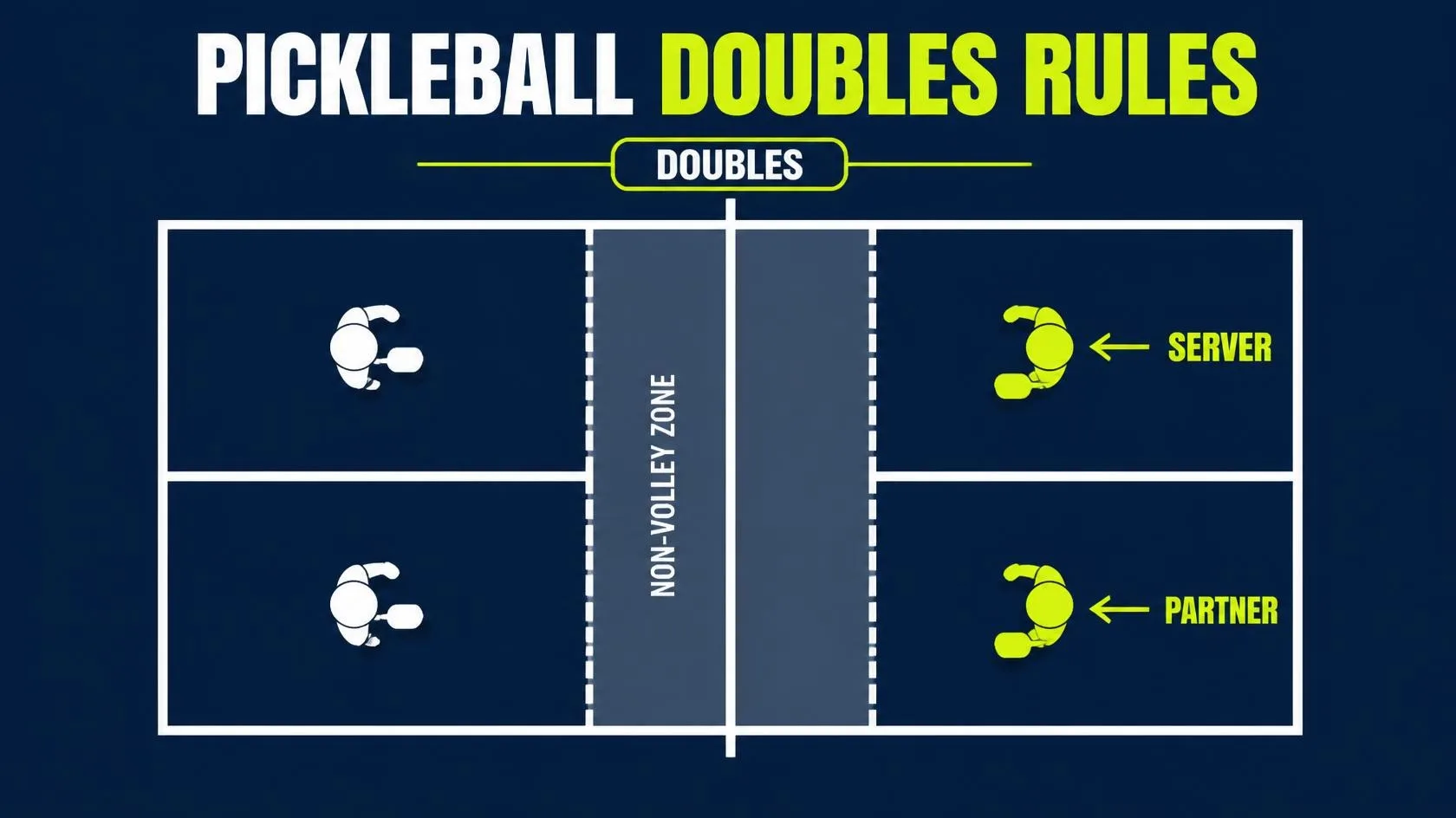
Pickleball doubles rules, in short: Doubles is the way most people play pickleball, and it is also the version that confuses beginners the most. The serve keeps changing hands, the score has three numbers instead of two, and sooner or later somebody asks, “Wait, am I server one or server two?”
This guide clears all of that up: how the score call works, how serving rotates between partners, why every game starts at 0-0-2, and how stacking works. There is also a rally-by-rally walkthrough of a real scoring sequence, the part most guides skip and beginners actually need.
Quick answer: pickleball doubles rules in 30 seconds
Only the serving team can score, both partners serve before a side out, and the score is called as three numbers.
- Each team has two players, and both players serve before the serve passes to the other team. The one exception is the very first turn of the game.
- Only the serving team can score points. This is called side-out scoring.
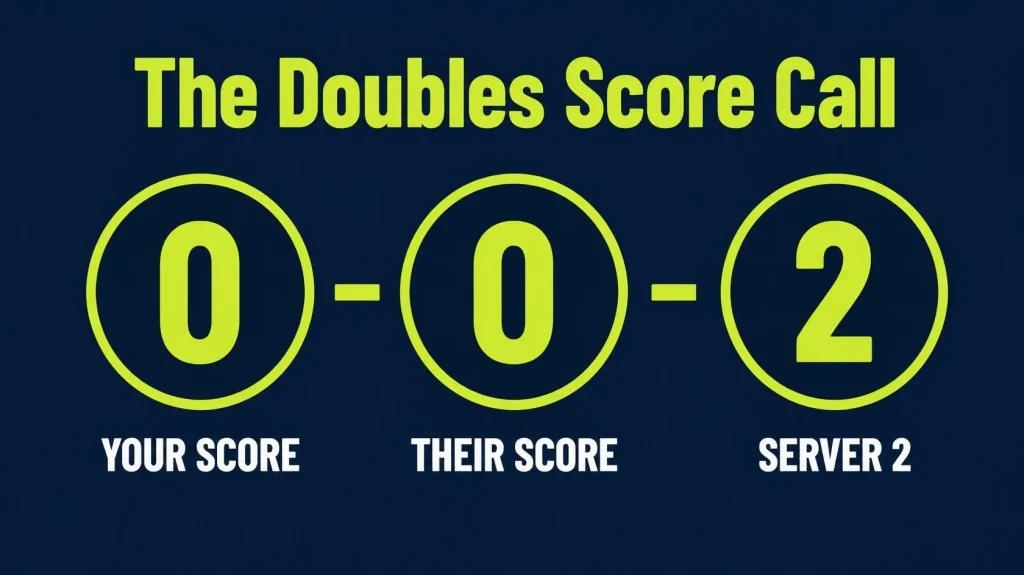
- The score is called as three numbers: your team’s score, the other team’s score, and the server number (1 or 2).
- Every game starts at 0-0-2, which gives the first serving team only one server to open the game.
- Games are usually played to 11 points, win by 2.
- The two-bounce rule applies: the serve and the return of serve must both bounce before they are hit.
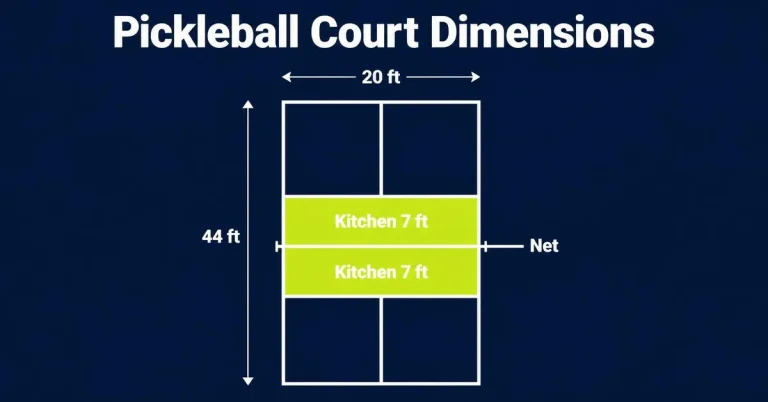
- You cannot volley while standing in the non-volley zone, the 7-foot area by the net that everyone calls the kitchen. Our full kitchen rules guide covers that zone in detail.
- Partners can stand almost anywhere on their own side of the net. That freedom is what makes stacking legal.
The three-number score call, explained plainly
In singles, the score is two numbers. In doubles, the server calls three numbers out loud before every serve:
- Your team’s score
- The receiving team’s score
- The server number: 1 if you are the first server of your team’s turn, 2 if you are the second
So if your team has 4 points, the other team has 3, and your partner already served and lost a rally during this turn, you call “4-3-2” as you step up to serve. Everyone on court now knows the score and knows that if your team loses this rally, the serve goes to the other team, because server 2 is the last server of the turn.
A handy way to remember the order is “us, them, server.” Say your score first, then theirs, then which server you are.
The third number matters more than it looks. It tells both teams how much room the serving team has left. On server 1, a lost rally only moves the serve one step over. On server 2, a lost rally ends the turn.
How serving works in doubles
Here is the basic serving sequence:
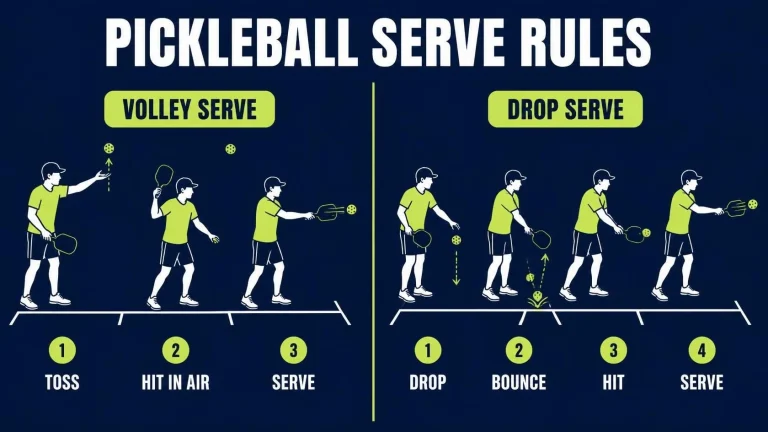
- The server hits the ball underhand, diagonally, into the opposite service box. The serve has to land past the kitchen line. A serve that clips the kitchen line is short, and that is a fault. The full breakdown of what makes a serve legal is in our pickleball serve rules guide.
- If the serving team wins the rally, they score a point, the two partners switch sides, and the same player serves again from the other box.
- If the serving team loses the rally, no point is scored by anyone. The serve moves to the second server on the same team.
- When the second server’s team loses a rally, that is a side out. The serve passes to the other team.
- When your team gets the serve back after a side out, the first server is the player who is standing in the correct position based on your score. If your score is even, the player who started the game on the right side is on the right, and serves first. If your score is odd, that player is on the left, and their partner serves first from the right.
That last point is the built-in memory system of doubles. You do not have to remember who served last. You only have to remember who started the game on the right side of your team, and whether your score is even or odd. Even score, the starter is on the right. Odd score, the starter is on the left. Everything else falls out of that.
Why the game starts at 0-0-2
Serving first is a small advantage, because only the serving team can score. To keep that in check, the rules give the first serving team just one server for its opening turn.
That opening server is simply labeled server 2. That is why the first call of every doubles game is 0-0-2. Your partner does not serve in that first rotation. If the opening server loses the rally, it is an immediate side out and the other team serves, with both of its players getting turns from then on.
From the second service turn onward, every team gets both servers, every time. The 0-0-2 start is a one-time balancing rule, not a different way of playing.
A worked example: six rallies, call by call
This is where most beginners either get it or stay confused, so let’s walk through the opening of a game. Team A is Alex and Sam. Team B is Jo and Kim. Alex starts the game serving for Team A.
| Rally | Server and call | What happens | Result |
|---|---|---|---|
| 1 | Alex serves, call is 0-0-2 | Team A wins the rally | Team A scores. Alex and Sam switch sides. Call is now 1-0-2 |
| 2 | Alex serves, call is 1-0-2 | Team A loses the rally | Alex was the second server, so this is a side out. Serve goes to Team B |
| 3 | Jo serves, call is 0-1-1 | Team B wins the rally | Team B scores. Jo and Kim switch sides. Call is now 1-1-1 |
| 4 | Jo serves, call is 1-1-1 | Team B wins again | Team B scores again. Partners switch back. Call is now 2-1-1 |
| 5 | Jo serves, call is 2-1-1 | Team B loses the rally | No side out yet. The serve passes to Kim as second server. Call is 2-1-2 |
| 6 | Kim serves, call is 2-1-2 | Team B loses the rally | Second server lost, so side out. Serve returns to Team A |
| 7 | Sam serves, call is 1-2-1 | New turn begins | Team A’s score is 1, which is odd, so Alex (the starting server) belongs on the left and Sam serves first from the right |
Read that table once and the whole system clicks. Points only move when the serving team wins a rally. The serve only changes teams after the second server loses. And the score itself tells you who should be standing where.
Positioning: who stands where, and why
At the start of a rally, the serving team lines up like this:
- The server stands behind the baseline in the correct service box, right side on an even score, left side on an odd score.
- The server’s partner also starts near the baseline, on the other side.
Beginners often wonder why the partner does not wait up at the kitchen line, the way the receiving team does. The answer is the two-bounce rule. The return of serve has to bounce before the serving team can hit it, and a deep return will catch a partner who is standing too far forward. So both serving players start back, then work their way forward together after the third shot.
The receiving team sets up differently:
- The receiver stands behind the baseline in the diagonal box, ready for the serve, which has to bounce first.
- The receiver’s partner can start right up at the kitchen line. They have no bounce to wait for, so they take the strong position early.
Once the rally is underway, there is no fixed formation. Both partners should move forward together and hold the kitchen line as a pair, shifting side to side to cover the middle. The biggest positioning mistake new teams make is one player rushing to the net while the other stays back. That split leaves a huge gap, and decent opponents will hit into it all game.
What is stacking?
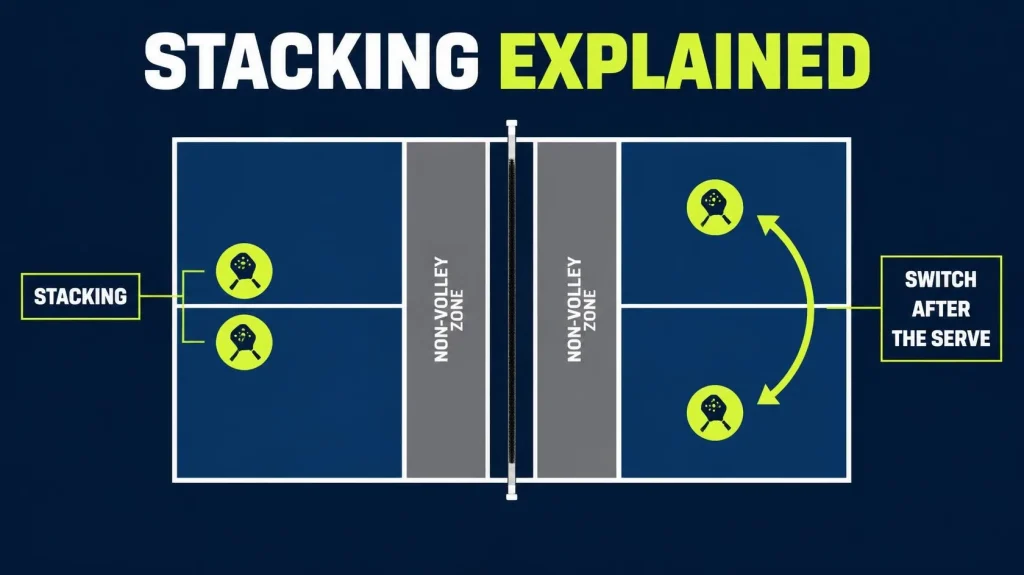
Stacking is the doubles tactic you will see in stronger games, where both partners start a point on the same side of the court and then slide into their preferred spots once the ball is in play.
Teams stack for one main reason: to keep each player on the side that suits them best. The classic case is a right-handed player with a strong forehand who wants to live on the left side, covering the middle with that forehand, paired with a left-handed partner who is happy on the right. Without stacking, the score forces them to swap sides every other point, and half the time their forehands point at the sidelines instead of the middle. With stacking, both forehands protect the middle on every point. Teams also stack to hide a weaker backhand or to keep a less mobile player away from the side opponents keep targeting.
How stacking works on the serve
The correct server always serves from the box the score demands. That part never changes. The stacking happens with the partner, and with where the server goes after the serve.
Here is a simple example. Your team’s score is odd, so your partner serves from the left box. You play your best pickleball on the left side, and you want to end up there once the rally starts. In a normal setup you would wait on the right, which is exactly where you do not want to be. So instead, you start the point standing just behind your partner on the left, or a step off the court beside her. The moment the serve leaves her paddle, she slides across to the right and you step into the left. The serve itself was completely legal, and both of you end up on the sides that suit you.
On the receiving side, the returner stands in the correct box and hits the return, while the partner waits near the kitchen line, off to the side or even off the court. After the return, both players shift into their preferred spots as they move forward.
Is stacking legal?
Yes, completely. Under Rules 5.B.1 and 5.B.4 of the USA Pickleball rulebook, beyond the server, there is no restriction on where any player stands, as long as everyone is on their own side of the net. Players can stand on the court or off it. Only two things are pinned down: the correct server must serve from the correct service court, and the correct receiver must receive the serve. If the wrong player serves, serves from the wrong box, or takes a serve that was not theirs, that is a fault. Stacking moves everyone else around freely, and it never touches those two requirements.
Some stacking teams use quiet hand signals behind the back, an open palm for “switch” and a closed fist for “stay,” so the opponents cannot plan around the move.
Should beginners stack?
Honestly, not at first. Stacking pays off only when a team already handles the basics without thinking: calling the score, tracking server numbers, and knowing where each player belongs on every point. If you are still getting lost in the rotation, stacking adds one more layer to track and causes more faults than it prevents.
Pro tip: A sensible path is to learn the game in traditional positions, then try half stacking, stacking only on your own serve and playing normal positions when receiving. Your team controls when the point starts on serve, so that half is easier to manage. Once it feels automatic, stack on returns too if it still helps.
Rally scoring: the other system you will hear about
Everything in this guide uses side-out scoring, pickleball’s traditional system and the official default. You may also run into rally scoring, where every rally is worth a point no matter who served. Rally scoring games are often played to 21, win by 2, though versions to 11 or 15 exist. There is no server number in the call, and in many rally formats the serve passes straight to the other team after a lost rally.
Some leagues and events offer rally scoring because games finish faster. If your group tries it, agree on the format before the first serve. Mixing the two systems mid-game is how friendly matches turn into score arguments.
Doubles strategy basics
Rules keep the game fair. These habits win the rallies.
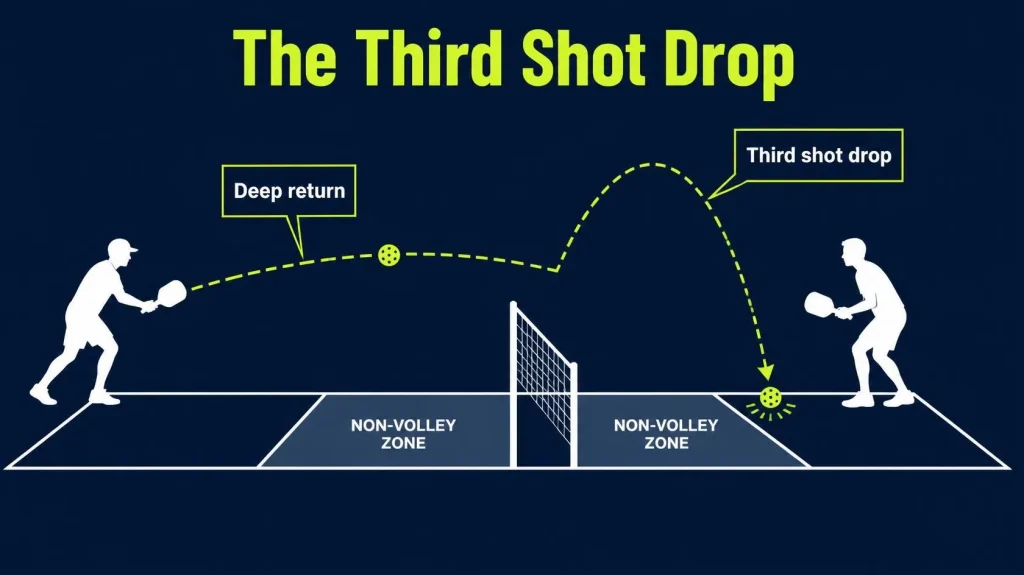
- The third-shot drop. The serving team is at a disadvantage after the serve, because the return must bounce and the receiving team is already set at the net. A soft third shot that drops into the kitchen, called a third-shot drop, gives your team time to move forward instead of watching the returners blast a drive at your feet. It does not have to be perfect. It just has to be soft enough to buy you steps.
- Communication calls. Most free points in beginner doubles are given away in the middle, where a ball lands between partners while both watch it. Fix it with three short calls: “mine,” “yours,” and “out.” Call early and loud. As a rough rule, the player whose forehand covers the middle takes middle balls.
- The kitchen battle. Most doubles points are decided at the non-volley zone line, in soft exchanges called dink rallies. Both teams trade low shots that bounce in the kitchen and wait for one to pop up high enough to attack. Patience wins more of these than power does. Our kitchen rules guide covers the zone rules and the momentum rule behind those exchanges.
- Move as a pair. Shift together, advance together, retreat together. Two players standing at the same depth can cover the court. Two players at different depths leave a target between them.
Singles vs doubles: the key differences
If you have played one format and are switching to the other, the differences are smaller than they look. The full breakdown for the one-on-one game is in our pickleball singles rules guide.
| Rule | Singles | Doubles |
|---|---|---|
| Score call | Two numbers: your score, opponent’s score | Three numbers: your score, their score, server number |
| Servers per turn | One | Two, except the first turn of the game (0-0-2) |
| Side out happens when | The server loses a rally | The second server loses a rally |
| Who scores | Only the serving player | Only the serving team |
| Positioning | One player covers the whole court | Partners share the court and can stack |
| Game length | To 11, win by 2 | To 11, win by 2 |
Frequently asked questions
What do the three numbers mean in doubles scoring?
The first number is the serving team’s score, the second is the receiving team’s score, and the third is the server number, 1 for the first server of the turn or 2 for the second. A call of 7-5-1 means the serving team leads 7 to 5 and its first server is about to serve.
Why does a doubles game start at 0-0-2?
The first serving team only gets one server for its opening turn, which balances the advantage of serving first. That single server is labeled server 2, so the opening call is 0-0-2. If that server loses the rally, the serve changes hands right away.
What is the second server rule?
Each team normally gets two serving turns per rotation, one for each player. When the first server’s team loses a rally, the serve moves to the partner, the second server. The serve only passes to the other team when the second server’s team loses a rally.
Who serves first after a side out?
The player standing in the correct position for the team’s score. If the team’s score is even, the player who began the game on the right side is on the right and serves first. If the score is odd, that player is on the left, so the partner serves first from the right side.
Can both players on a team hit the ball?
Yes. During a rally, either partner can hit any shot, and partners often cross sides chasing the ball. The one restricted moment is the serve itself: only the correct receiver may return it. If the receiver’s partner gets hit by the serve or plays it, that is a fault against the receiving team.
What is stacking in pickleball?
Stacking is a positioning tactic where both partners start a point on the same side of the court, then move into their preferred sides once the serve or return is hit. Teams use it to keep a strong forehand in the middle or to protect a weaker side. The correct server and correct receiver still have to be in the right places, which is what keeps stacking within the rules.
Is stacking legal in pickleball?
Yes. The rulebook places no restriction on where players stand, other than the correct server serving from the correct court and the correct receiver receiving. Partners can even stand off the court. As long as those two requirements are met, stacking is a fair tactic at every level of play.
Can partners switch sides during a rally?
They can. Once the ball is in play, there is no rule that keeps a player on one half of the court. Partners swap sides constantly during rallies as they chase balls and cover space. The fixed positions only matter at the moment of the serve.
What happens if the wrong player serves?
It is a fault. The same applies if the correct player serves from the wrong side, or if the wrong receiver returns the serve. Relaxed games often just replay the point, but under the official rules the rally is lost. Checking the score call before each serve prevents nearly all of these errors.
How many points do you need to win a doubles game?
Games are usually played to 11 points, and you must win by 2. Some tournaments and clubs play to 15 or 21, especially in later rounds or rally scoring formats. If the score reaches 10-10 in a game to 11, play continues until one team leads by 2.
Sources and verification
Checked: October 25, 2026, against the 2026 USA Pickleball Official Rulebook and USA Pickleball guidance.

2 Comments