
Indoor vs Outdoor Pickleball Balls: Holes, Bounce, and Use
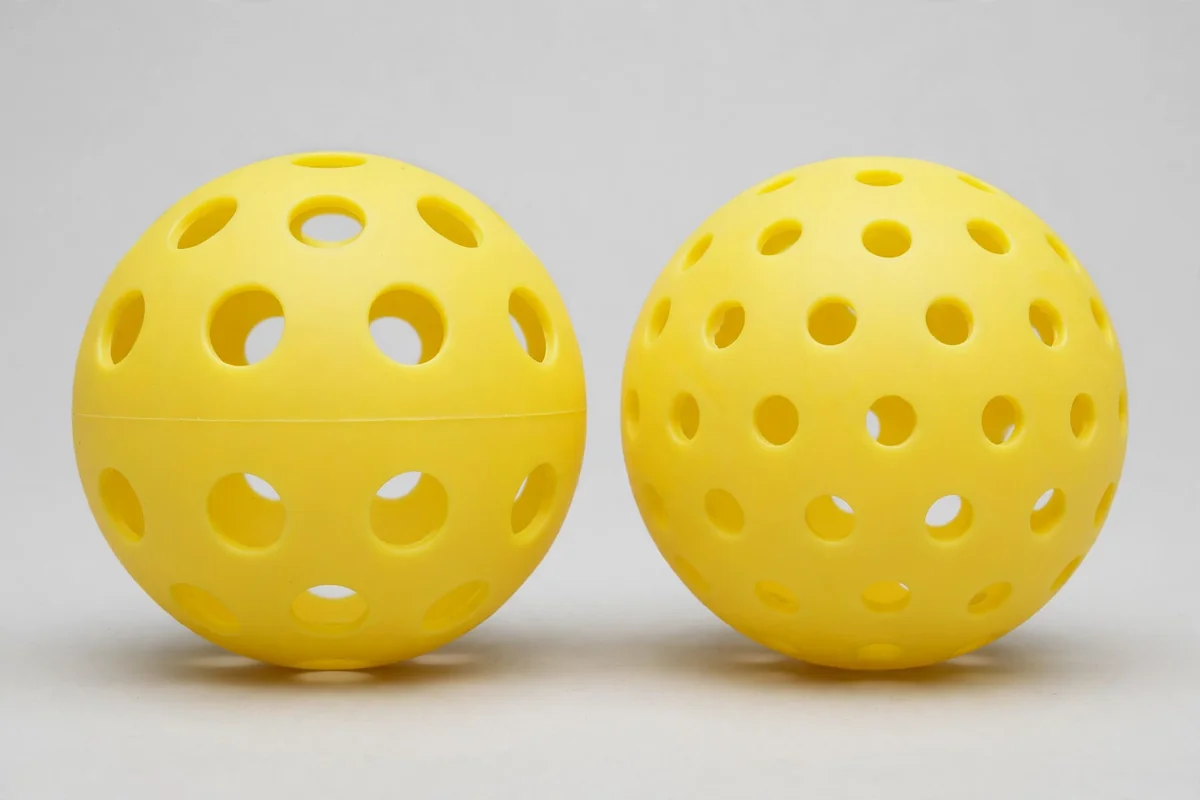
Indoor vs outdoor pickleball balls differ in one clear way: indoor balls have 26 larger holes and softer plastic for smooth, wind-free floors, while outdoor balls have 40 smaller holes and harder plastic for rough outdoor courts and wind.
Show up to open play with the wrong ball and someone will tell you within a minute. It usually sounds like, “That is an indoor ball, we are outside.” They are right, and the difference is not small. Indoor and outdoor pickleballs look alike at a glance, but they are built for different floors, different air, and different wear. Play an indoor ball on rough concrete and it wears out fast and drifts in the wind. Play an outdoor ball on a gym floor and it skids, pops loudly, and plays too fast for the space.
This guide to indoor vs outdoor pickleball balls covers how to tell the two apart, what each spec actually does on court, which ball fits each surface, what happens when you mix them up, and how to store balls so they last. No guessing: every number below is checked against the official ball standards or manufacturer specs, and the checked line at the end shows the source basis.
Quick answer
✓Indoor vs outdoor pickleball balls at a glance: count the holes — 26 means indoor, 40 means outdoor.
- Indoor balls have 26 larger holes, softer plastic, and a lighter build. They are made for smooth gym floors and sport courts with no wind.
- Outdoor balls have 40 smaller holes, harder plastic, and a heavier build. They are made for concrete, asphalt, and acrylic outdoor courts, and they cut through wind better.
- Both balls are the same size. The official diameter range is 2.87 to 2.97 inches, and the official weight range is 0.78 to 0.935 ounces.
- A typical indoor ball weighs around 0.8 ounces. A typical outdoor ball weighs around 0.9 ounces. That tenth of an ounce changes pace, bounce, and feel.
- Indoor balls play slower, quieter, and with more control. Outdoor balls play faster, louder, and with a firmer bounce.
- The fastest way to tell them apart is to count the holes: 26 means indoor, 40 means outdoor.
- Use the ball that matches where you are standing. If you play both indoors and outdoors, keep both types in your bag.
How to tell an indoor ball from an outdoor ball
Four checks tell indoor vs outdoor pickleball balls apart in seconds. You do not need the packaging.
- Count the holes. This is the reliable test. Indoor balls have 26 holes. Outdoor balls have 40 holes. Count one row and multiply, or just count them all. If you count 26, it is an indoor ball. If you count 40, it is an outdoor ball. Most balls also show it in the model name: Franklin sells the X-26 for indoor play and the X-40 for outdoor play, and the number in the name is the hole count.
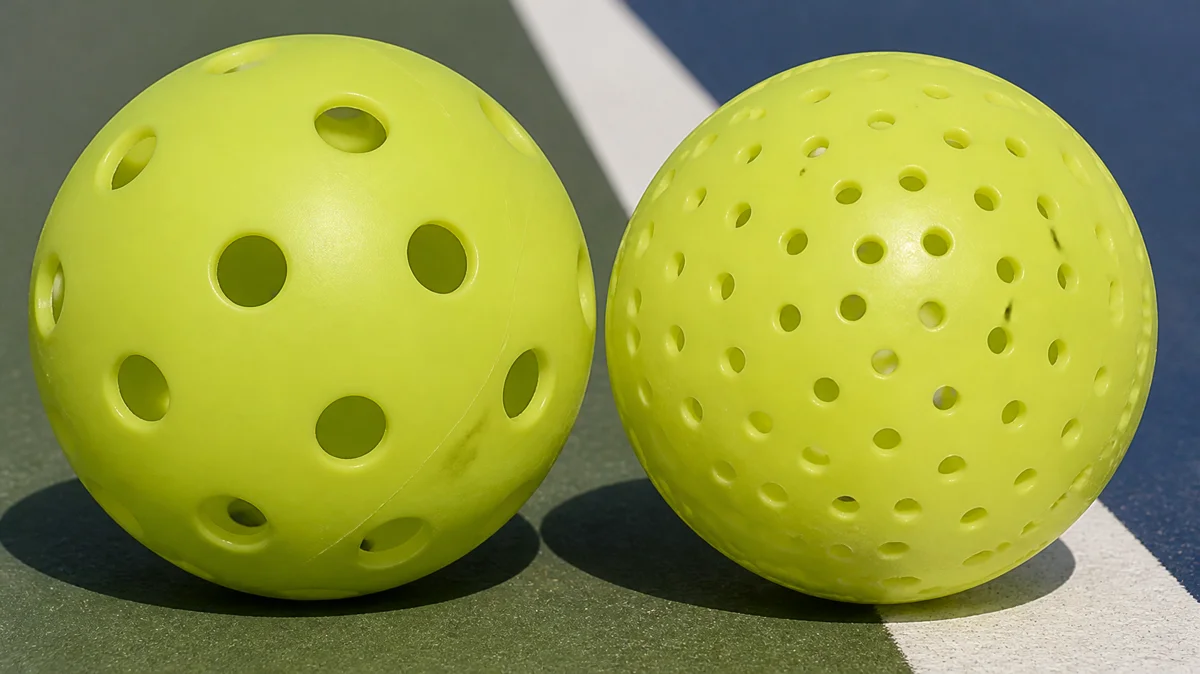
- Look at the hole size. Indoor holes are visibly larger, roughly 0.43 inches across. Outdoor holes are smaller, roughly 0.28 inches across. Hold the two side by side and the difference is obvious: the indoor ball looks more open, the outdoor ball looks more solid.
- Squeeze it. Indoor balls use softer plastic and give a little when you press them. Outdoor balls use harder plastic and feel stiff, almost rigid. Tap each one on a table and you will hear it too: the outdoor ball clicks, the indoor ball thuds.
- Read the label. Sanctioned balls carry the maker name or logo on the surface, and most brands print “indoor” or “outdoor” on the ball or the pack. If the print has worn off, the hole count still tells you.
One thing that does not tell you: color. Both types come in yellow, orange, white, and other colors. A yellow ball can be indoor or outdoor. Count the holes instead of trusting the color.
Indoor vs outdoor pickleball balls: the full comparison
| Feature | Indoor ball | Outdoor ball |
|---|---|---|
| Hole count | 26 larger holes | 40 smaller holes |
| Hole size | About 0.43 inches across | About 0.28 inches across |
| Typical weight | About 0.8 ounces | About 0.9 ounces |
| Official weight range | 0.78 to 0.935 ounces (both types) | 0.78 to 0.935 ounces (both types) |
| Diameter | 2.87 to 2.97 inches (both types) | 2.87 to 2.97 inches (both types) |
| Plastic | Softer, more flexible | Harder, stiffer |
| Bounce | Lower and slower on smooth floors | Firmer and faster on hard courts |
| Official bounce test | 30 to 34 inches from a 78 inch drop (both types) | 30 to 34 inches from a 78 inch drop (both types) |
| Wind handling | Poor, the ball drifts | Good, smaller holes cut through wind |
| Noise | Quieter, soft pop | Louder, sharp pop |
| Spin | More grip on the paddle, easier spin | Less grip, flatter shots |
| Durability | Lasts longer on smooth floors, goes out of round over time | Cracks sooner on rough surfaces and in cold weather |
| Price | Similar per ball, bulk packs lower the per ball cost | Similar per ball, bulk packs lower the per ball cost |
| Best surface | Gym wood, smooth sport court tile | Concrete, asphalt, outdoor acrylic |
For indoor vs outdoor pickleball balls, why do the holes matter so much? A ball that weighs under an ounce is pushed around by air. Larger holes let more air through the ball, which slows it down and softens its flight. That is fine indoors, where there is no wind and control matters more than speed. Smaller holes let less air through, so the ball holds its line better in a breeze. That is what you need outdoors, where even a light wind can move a slow ball a foot off target.
Weight works the same way. The heavier outdoor ball carries more momentum, so it punches through wind and bounces firmly off hard ground. The lighter indoor ball is easier to control at the kitchen line, where soft shots win points. Our kitchen rules guide explains why those soft exchanges decide so many games, and the indoor ball is built for exactly that kind of rally.
Which ball for which surface
When choosing indoor vs outdoor pickleball balls, match the ball to the floor under your feet, not to the roof over your head. A covered outdoor court is still an outdoor court if the floor is concrete.
- Gym wood floors: indoor ball. Wood is smooth and kind to soft plastic. An indoor ball grips, bounces true, and lasts a long time here. An outdoor ball skids on wood and plays too hot for a gym game.
- Smooth sport court tile: indoor ball. Indoor tile courts, the kind with interlocking plastic tiles, are smooth enough for indoor balls. The softer ball gives you the control these fast floors demand.
- Concrete: outdoor ball. Concrete is rough and it eats soft plastic. An indoor ball on concrete scuffs, wears thin, and goes out of round quickly. The harder outdoor ball is built for this surface.
- Asphalt: outdoor ball. Asphalt is the roughest common court surface and the hardest on balls. Use outdoor balls only, and expect them to wear faster here than on any other surface.
- Outdoor acrylic courts: outdoor ball. Dedicated outdoor courts with an acrylic coating over asphalt or concrete still count as outdoor surfaces. They are textured, they sit in the wind, and they need the outdoor ball.
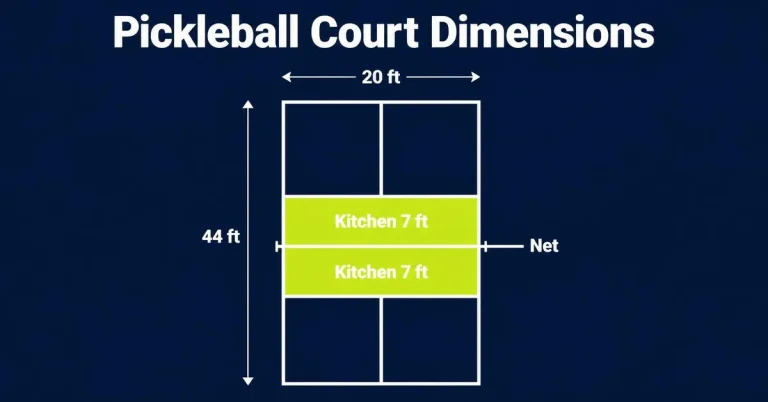
- Tennis court surfaces: outdoor ball. If you are playing on a converted tennis court, the surface is outdoor acrylic over asphalt or concrete, so the outdoor ball is the right pick. Our court dimensions guide covers the surfaces and layouts used for conversions.
A simple rule covers the edge cases: smooth floor plus no wind means indoor ball, rough floor or any wind means outdoor ball. When in doubt, ask what ball the group already uses. Open play groups settle on one ball fast, and matching the group matters more than any small preference of your own.
What happens if you use the wrong ball
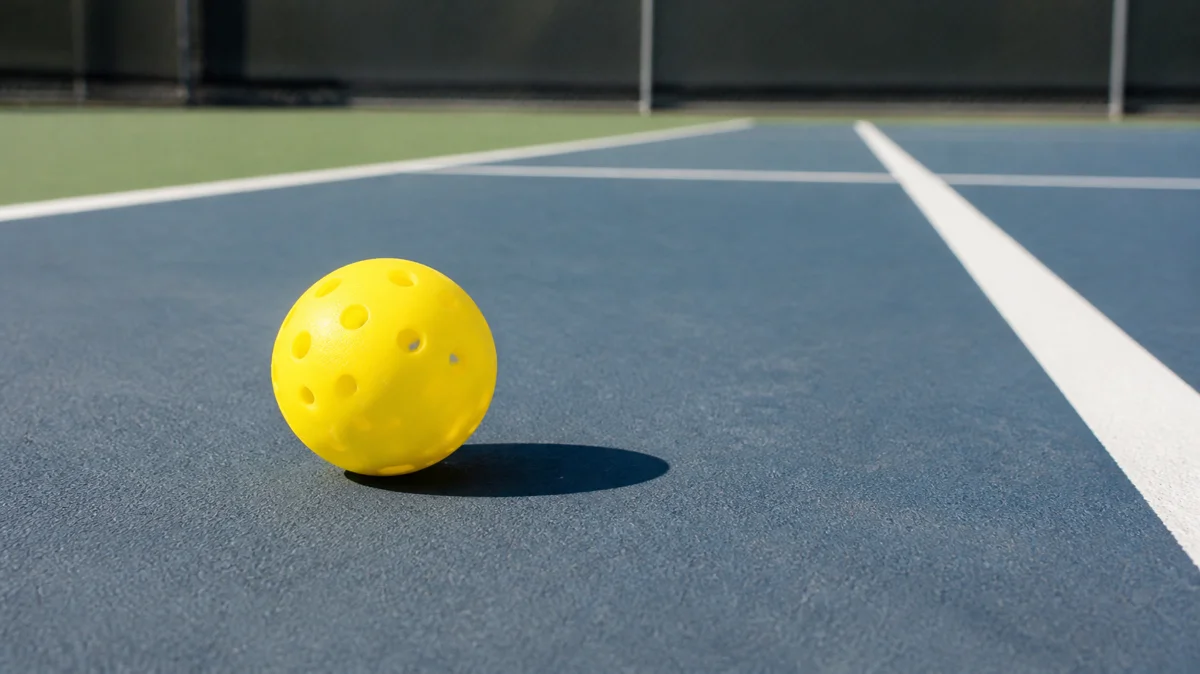
With indoor vs outdoor pickleball balls, nothing breaks and no rule is violated in casual play. The game just plays worse, and the ball wears out sooner.
- Indoor ball outdoors. The wind pushes it around, so serves and deep shots drift. The rough surface scuffs the soft plastic, and the ball goes out of round faster, which shows up as wobble in flight and uneven bounces. On a calm day on a smooth outdoor court you can get away with it for a casual game, but it is a poor choice for regular outdoor play.
- Outdoor ball indoors. The hard ball is loud on a gym floor, and in a shared sports hall that noise carries. It also plays fast: it skids on wood, bounces firmly, and gives you less time on soft shots. In a gym with other activities nearby, the loud pop alone is reason enough to switch. Some indoor venues ask players to use indoor balls only, and a few noise restricted communities require quieter balls outdoors too.
- The covered court middle ground. Covered outdoor courts block rain and sun but not wind, and their floors are usually concrete or acrylic. Treat them as outdoor courts and use outdoor balls. The roof does not change the floor or the breeze.
One more practical note: the ball changes your timing. Players who switch from indoor to outdoor often say their third shot drops fall short at first, because the outdoor ball comes off the paddle faster and bounces higher. Give yourself a few rallies to adjust after any switch. Our serve rules guide covers the two bounce rule, and the ball type changes how that second bounce behaves: the outdoor ball bounces firmer and faster, the indoor ball sits up softer.
How long balls last and when to replace them
For indoor vs outdoor pickleball balls, there is no fixed number of games a ball lasts, because surface, temperature, and hitting power change it so much. What you can watch for is consistent: replace a ball when it cracks, goes out of round, or feels soft.
- Cracking. Outdoor balls crack, and cold weather speeds it up. Hard plastic turns brittle in the cold, so a ball that survives all summer can crack on the first cold morning of fall. Check outdoor balls before winter sessions and carry a spare. A cracked ball is done: even a hairline crack changes the flight.
- Going out of round. Indoor balls fail this way more often. Heat, hard hits, and being stepped on push the soft plastic out of shape. Test it by rolling the ball on a flat table: a round ball rolls straight, an out of round ball wobbles. A wobbling ball bounces unevenly and should be retired.
- Going soft. Any ball that feels noticeably softer when you squeeze it than a new ball of the same model has lost its firmness. It will bounce lower and play dead. Retire it.
- The squeeze and bounce test. Before a session, squeeze each ball and drop it from shoulder height onto the court. A good ball feels firm and bounces evenly. A ball that thuds, wobbles, or bounces unevenly goes back in the bag. Carrying two or three spares costs little and saves a session.
As a rough guide, outdoor balls wear out faster than indoor balls in regular play, because rough surfaces and weather work against them. Indoor balls on smooth floors last the longest of any setup. If you play three or four times a week outdoors, expect to replace balls regularly. If you play indoors on wood, a ball can last much longer. The honest answer is to judge each ball by the tests above, not by a calendar.
Storage tips
Balls are cheap, but bad storage kills them early.
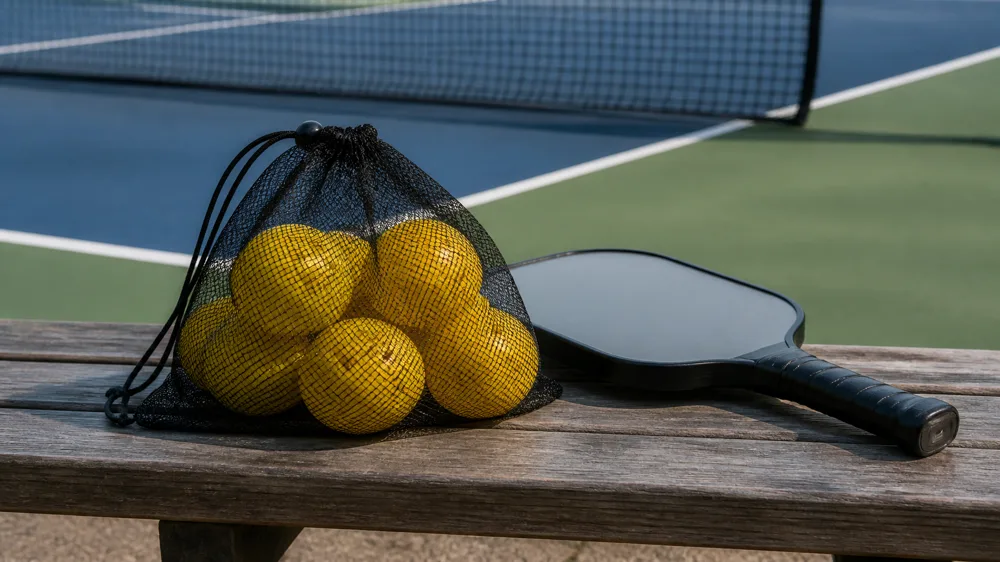
- Keep balls in a mesh bag or a tube, not loose in the bottom of a gear bag where they get stepped on and crushed.
- Keep them out of a hot car trunk. Heat softens plastic and warps indoor balls out of round. A trunk in summer is the fastest way to ruin a set.
- Do not leave outdoor balls in a freezing garage all winter and then play them cold. Let them warm up to room temperature first, since cold hard plastic cracks more easily.
- Keep balls dry and out of direct sun between sessions. Sun and damp age plastic over time.
- Rotate your stock. Use the oldest balls for warmups and drills, and keep fresh ones for games.
- Buy in bulk packs of 6 or 12 if you play often. The per ball cost drops, and you always have a fresh spare when one cracks mid session.
Frequently asked questions
Can I use outdoor balls indoors?
You can in casual play, but it is a poor fit. Outdoor balls are loud on gym floors, skid on wood, and play too fast for most indoor games. Some indoor venues ask players to use indoor balls only. If you only own one type and you are playing indoors, use indoor balls.
Can I use indoor balls outdoors?
For one calm, casual game on a smooth outdoor court, yes. For regular outdoor play, no. Wind pushes the light indoor ball around, and rough concrete or asphalt wears the soft plastic out fast. The ball will go out of round and start wobbling sooner than an outdoor ball would.
How many holes does an indoor pickleball have?
An indoor pickleball has 26 larger holes, roughly 0.43 inches across. The larger holes slow the ball down and give more control on smooth floors with no wind.
How many holes does an outdoor pickleball have?
An outdoor pickleball has 40 smaller holes, roughly 0.28 inches across. The smaller holes help the ball hold its line in wind and fly straighter outdoors.
Why do outdoor pickleballs crack in cold weather?
Outdoor balls use hard plastic, and hard plastic turns brittle when it gets cold. A hard hit on a cold morning can crack a ball that played fine all summer. Warm balls up to room temperature before winter sessions, and carry spares when the temperature drops.
Are indoor and outdoor pickleballs the same size?
Yes. Both types fall in the same official size range: 2.87 to 2.97 inches in diameter. The difference is in hole count, hole size, plastic hardness, and weight, not in size.
Which ball is better for beginners?
The ball that matches your court. Beginners playing indoors should start with an indoor ball, because its slower pace and softer feel make rallies easier to control. Beginners playing outdoors should start with an outdoor ball, because an indoor ball in the wind will frustrate a new player fast. Either way, use the ball your group already uses.
Do outdoor balls bounce higher than indoor balls?
On court, yes, in most cases. The harder outdoor ball bounces firmly off hard outdoor surfaces, while the softer indoor ball plays lower and slower on smooth floors. Both types must pass the same official bounce test, 30 to 34 inches from a 78 inch drop, but the surface they land on changes what you feel in a rally.
What ball do tournaments use?
The tournament director picks the ball, and it is always a model from the official approved ball list. Two well known examples are the Franklin X-40, the official ball of the US Open Pickleball Championships, and the Dura Fast 40, used on the pro tour. If you are entering an event, check which ball it uses and practice with that exact model before the event.
Are quieter pickleballs legal?
Quieter balls exist for noise restricted areas, and they are a real option if your courts have noise limits. Any ball used in sanctioned play still has to meet the official specs for size, weight, bounce, and hole count, so check that a quiet ball is on the approved list before using it in an event. For casual play, the venue rules matter more than the label.
How many pickleballs should I buy?
A pack of 6 covers most casual players, and a pack of 12 suits regular players and groups. Balls crack and wear out, so a spare in the bag is worth more than a perfect ball at home. Buy the type that matches where you play most, and add the other type only when you start playing in both settings.
Sources and verification
Checked: October 25, 2026, against the USA Pickleball ball standards, Franklin Sports X-40 product specs, and current manufacturer and retailer guides.
4 Comments