Pickleball vs Tennis: 7 Key Differences You Should Know
Home > Guides > Pickleball vs Tennis: 7 Key Differences You Should Know
Comparison
Pickleball vs tennis is the first question most new players ask, and the answer is bigger than the court. The two games share a net and a ball, but they differ in court size, equipment, serves, scoring, and pace. This guide compares them side by side, clears up the paddle tennis confusion, and helps you choose which game to start with.
✓Pickleball is smaller, slower, and easier to learn: a 20 by 44 foot court, an underhand serve, and games to 11. Tennis is bigger, faster, and more physical: a 78 foot court, overhand serves, and games built into sets.
Pickleball vs tennis at a glance
| Feature | Pickleball | Tennis |
|---|---|---|
| Court size | 20 x 44 ft (singles and doubles) | 78 ft long; 27 ft singles / 36 ft doubles wide |
| Net height | 34 in center, 36 in at posts | 36 in center, 42 in at posts |
| Equipment | Solid paddle, about 16 in | Strung racket, 27 in |
| Ball | Perforated plastic, 26-40 holes | Felt-covered pressurized rubber |
| Serve | Underhand, below waist, one attempt | Overhand, two attempts |
| Scoring | First to 11, win by 2; only serving side scores | Points to games to sets; either side scores |
| Special zone | 7 ft non-volley zone (kitchen) each side | None |
Court size and layout
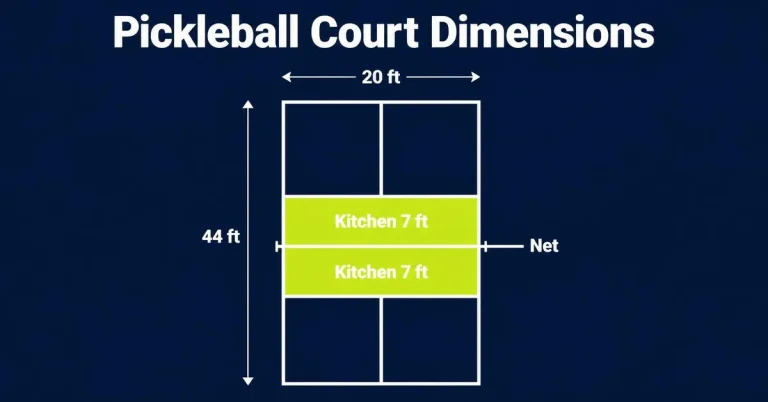
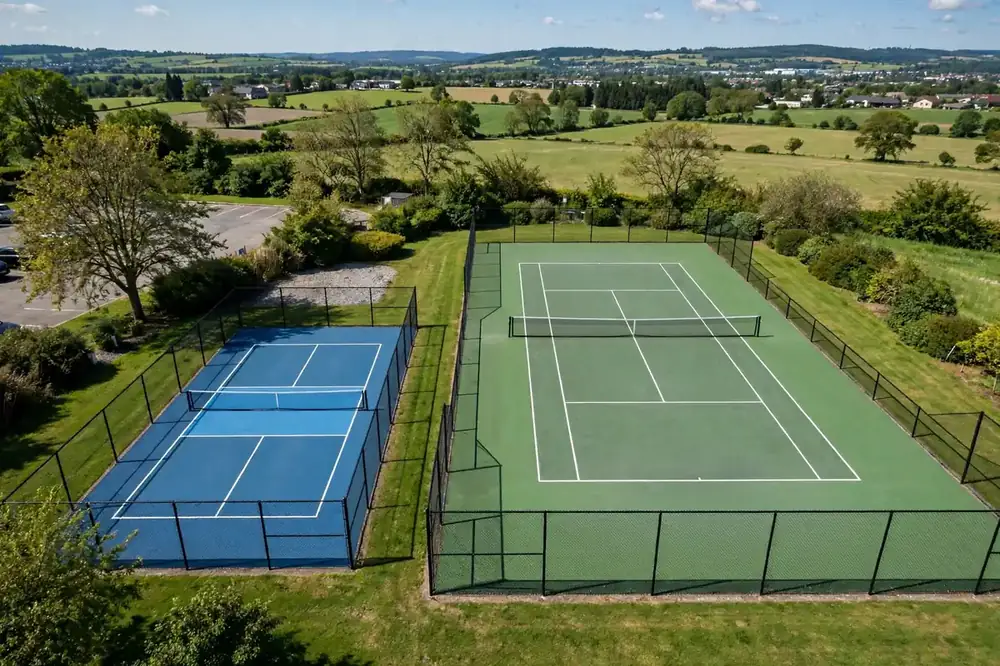
A pickleball court measures 20 feet wide by 44 feet long, and that size stays the same for singles and doubles. It is the same footprint as a badminton doubles court, which is no accident: pickleball was invented on a badminton court. A tennis court is 78 feet long, with a width of 27 feet for singles and 36 feet for doubles. The smaller court changes everything about movement. You cover less ground, rallies start faster, and doubles partners stay close enough to talk. As many as four pickleball courts can fit on one tennis court surface, depending on runoff space around the edges. The full size comparison, with line-by-line measurements, is in the court size comparison.
Net height
The pickleball net is 34 inches at the center and 36 inches at the posts. The tennis net is 36 inches at the center and 42 inches at the posts. Note the tennis figure carefully: some comparison pages list the tennis net at the posts as 36 inches, but that is the center height. The ITF standard is 42 inches at the posts, and that higher edge is part of why tennis serves and volleys play differently.
Equipment
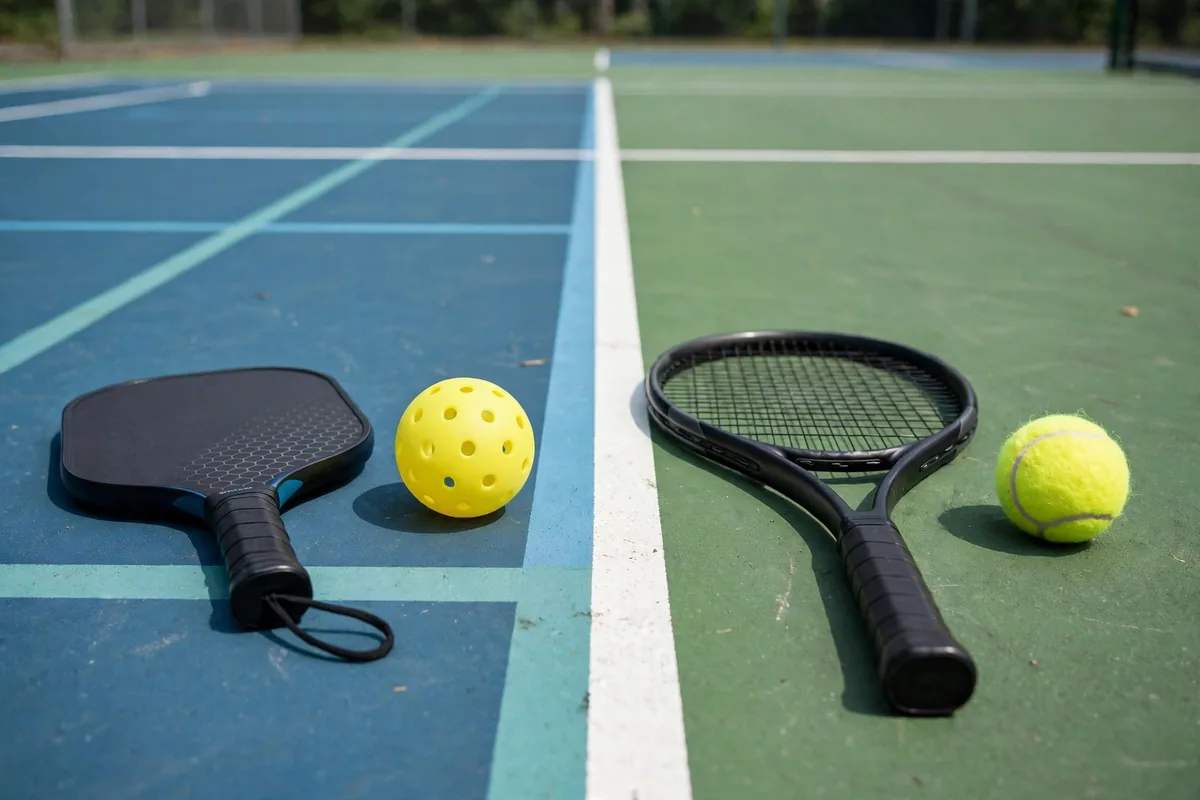
Pickleball uses a solid paddle, about 16 inches long, and a lightweight perforated plastic ball with 26 to 40 holes. Tennis uses a strung racket, 27 inches long, and a felt-covered pressurized rubber ball. The paddle gives you a firm, compact hitting surface with no strings to maintain. The racket gives you a longer lever and a string bed that adds power and spin, but it also demands a bigger swing and more strength to control.
Serves and scoring
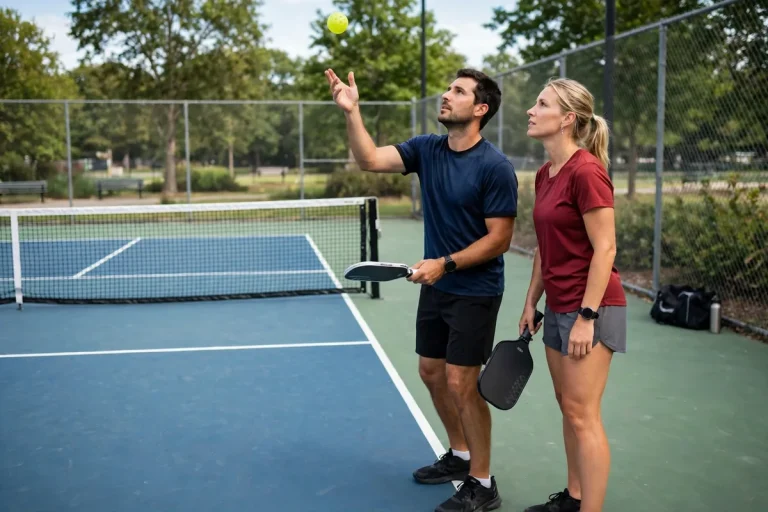
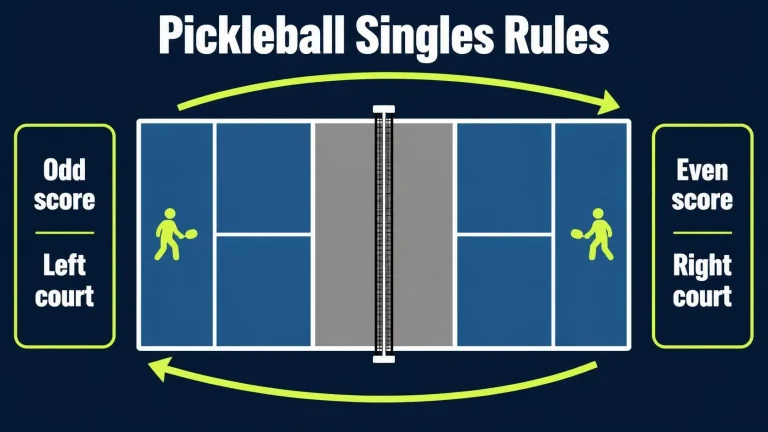
Pickleball serves are underhand only, with contact below the waist, and the ball must land in the diagonally opposite service court. You generally get one service attempt, using a volley serve or a drop serve. Tennis serves are usually overhand, struck from behind the baseline into the opposite service box, and you get two attempts. Scoring is where the games split most clearly. Pickleball uses side-out scoring: only the serving side can score, games usually go to 11 points, and you must win by 2. Doubles score calls use three numbers, and the opening call is 0-0-2. Tennis counts points as love, 15, 30, and 40, builds points into games, games into sets, and sets into a match, and either side can score at any time. Pickleball also has the double-bounce rule: after the serve, the ball must bounce once on each side before volleys are allowed. Tennis has no such rule. A rally-scoring format for pickleball, where either side can score, gained provisional approval in 2025 for certain tournament formats, but side-out scoring remains the standard for most recreational play. The scoring guide explains pickleball’s system in full. For the official rules behind both games, USA Pickleball publishes the rulebook.
Pace and play style
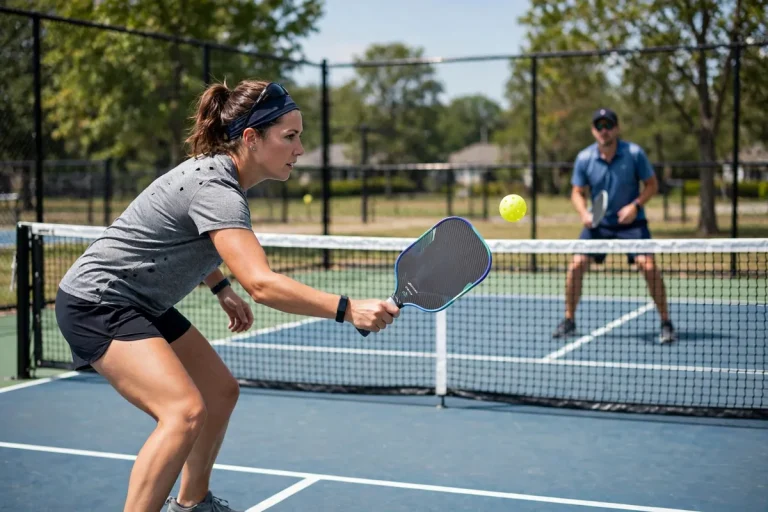
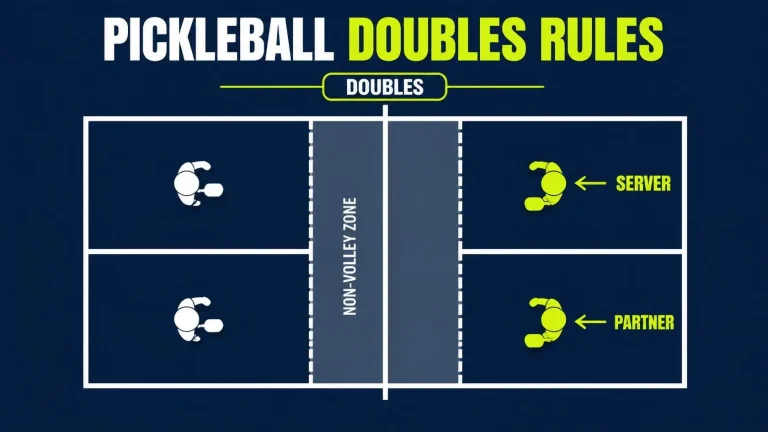
The smaller court and the slower plastic ball make pickleball a game of quick reactions and placement rather than raw power. Rallies last longer, the ball comes back more often, and the kitchen creates a soft game of dinks, blocks, and resets that has no tennis equivalent. Tennis covers far more ground at higher speed, with bigger serves, longer groundstrokes, and volleys from anywhere on your side, since there is no non-volley zone.
Is pickleball easier than tennis?
Easier to learn, yes. The smaller court, slower ball, underhand serve, and simpler scoring get most beginners rallying in their first session. That does not mean the game is easy. High-level pickleball is still fast and demanding, with hands battles at the net, precise placement, and real strategy. The honest version is: easier to start, hard to master. A practice plan for the switch, or for starting from zero, is in the drills guide.
Paddle tennis is not pickleball
Paddle tennis is a separate sport with its own court, paddle, and scoring, and it follows traditional tennis scoring with overhand serves allowed. The names get mixed up because both games use paddles, and search results mix them together. If you are looking at paddle tennis, you are looking at a different game from pickleball.
Which game should you choose?
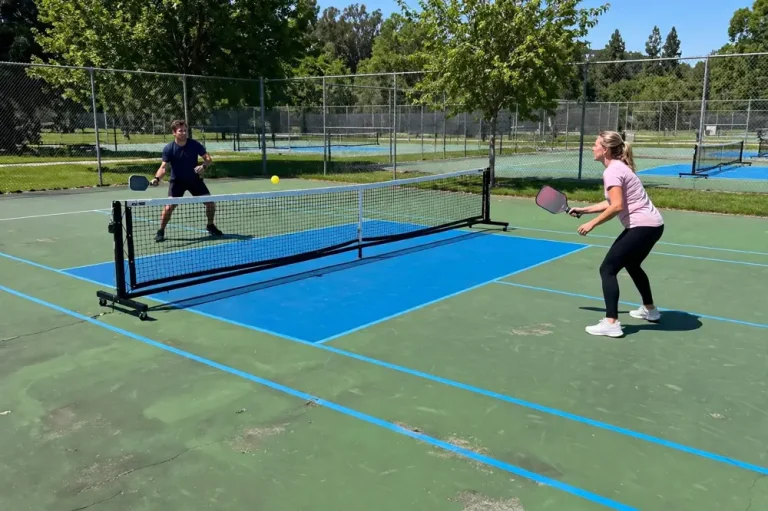
Choose pickleball if you want a smaller court, social doubles, an easier start, and less running. Choose tennis if you want power, speed, a bigger court, and an overhand serve game. Tennis players switching to pickleball should expect a smaller swing, softer hands, patience at the kitchen, and a lower net. You can try it on a tennis court with temporary pickleball lines on a tennis court and a portable net.
Pickleball vs tennis questions, answered
Is pickleball the same as tennis?
No. The court, the equipment, and the rules are all different. They share the idea of a net and a ball, and little else.
Are pickleball rules the same as tennis?
No. Pickleball has an underhand serve, a non-volley zone, a double-bounce rule, and side-out scoring. Tennis has overhand serves and game-set scoring.
Is a pickleball court the same as a tennis court?
No. A pickleball court is 20 by 44 feet, while a tennis court is 78 feet long and wider. As many as four pickleball courts can fit on one tennis court surface, depending on runoff space.
Is pickleball easier to play than tennis?
Easier to learn, yes. The smaller court, slower ball, and underhand serve get beginners rallying fast. At a high level it is still fast and demanding.
Can you play pickleball on a tennis court?
Yes, with temporary lines and a portable net, as covered above.
Related guides
Checked: October 31, 2026, against published comparisons and official court and net figures.