
Pickleball Drills for Beginners: 10 Drills to Improve Fast
Home > Guides > Pickleball Drills for Beginners: 10 Drills to Improve Fast
Technique
Pickleball drills for beginners work best when each drill has a clear goal. This guide gives you 10 drills: five you can do alone with a wall, and five with a partner, plus a 30-minute session plan and a four-week progression. Every drill links to the skill it builds, so you always know why you are doing it.
✓ Quick Answer
Start with three drills: wall dinks, serve placement, and the third shot drop. Do them three times a week for 30 minutes, and add one new drill each week.
Solo drills you can do alone
1. Wall dinks
Stand at kitchen distance from a wall and dink into it again and again, keeping your grip loose and your paddle in front of you. The wall returns everything, so you get far more touches than in a match. Stay close, keep the ball low, and reset your paddle after every contact.
Goal: 20 soft dinks in a row without a pop-up.
2. Wall volleys
Stand about 6 feet from a wall with your paddle up at chest height and volley the ball back before it bounces. Keep your knees bent and your swing short. This drill builds the fast hands you need at the net.
Goal: 20 consecutive volleys against the wall.
3. Serve placement
Take 10 serves from each side of the court and aim at the back third of the service box, not at power. A deep serve pushes the receiver back and gives you time to move forward. Practice both sides, because the even and odd courts feel different.
Goal: 7 out of 10 serves landing in bounds in the back third.
The serve rules guide covers legal contact and foot position in full.
4. Drop-feed third shot drop
Drop a ball in front of your feet, let it bounce, and hit a soft third shot drop toward a target on the ground where the kitchen would be. This is the hardest shot for most beginners, and self-feeding lets you repeat it without waiting for a partner.
Goal: 5 out of 10 drops landing in the kitchen target.
5. Shadow swings and split step
Swing your paddle without a ball, then add a small split step (a short hop into a ready stance) after each swing. This builds muscle memory for footwork, which is what gets you to the ball on time. Do it for two minutes as part of every warm-up.
Goal: smooth swings with a split step every time, no reaching or lunging.
Partner drills
6. Dink rally
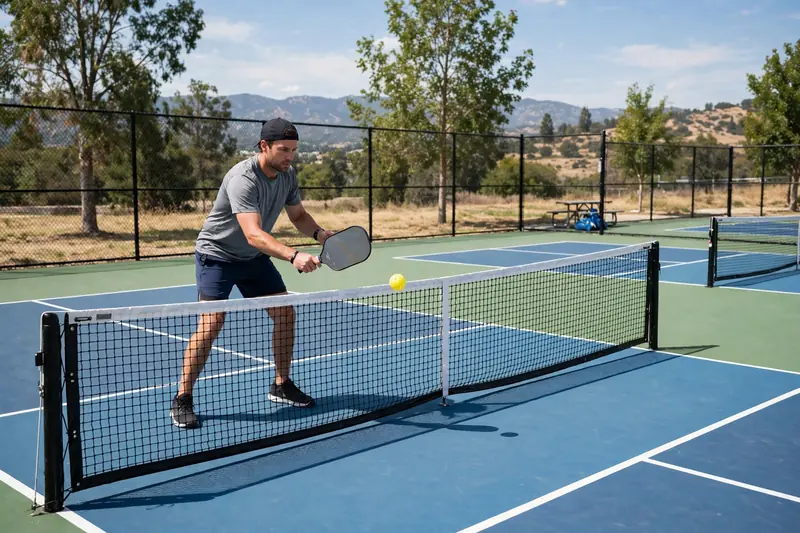
Stand at the kitchen line with your partner and trade soft dinks, keeping the ball low and inside the kitchen. Count your longest rally out loud. This is the single most useful drill for beginners, because the soft game is new to almost everyone.
Goal: a 10-shot rally, then build toward 20.
The dink guide explains the shot’s shape and purpose in full.
7. Crosscourt dinks
Play the same dink rally diagonally instead of straight ahead. Crosscourt dinks force you to move your feet and open up angles, which is how real points develop. Keep the ball low and aim for your partner’s feet.
Goal: 10 crosscourt dinks in a row on each side.
8. Third shot drop with a feeder
Your partner feeds you balls from the baseline while you practice the third shot drop into the kitchen, then move forward behind it. The feeder should vary the feeds slightly so you learn to adjust. This drill turns a solo skill into a real point pattern.
Goal: 5 out of 10 drops landing in the kitchen.
9. Serve and return depth
One player serves deep while the other returns deep past the kitchen line, then the rally stops and you start again. Deep serves and deep returns keep opponents back, which is the simplest way to win court position. Swap roles after 10 rounds each.
Goal: 6 out of 10 returns landing past the kitchen line.
10. Volley reflex rally
Stand close to the net with your partner and trade quick volleys, aiming at feet and gaps rather than hitting hard. Keep your paddle up and your swing short. This drill teaches you to react instead of winding up.
Goal: 15 volleys without an error.
A 30-minute session plan
Use this plan three times a week. It mixes shots inside one session instead of spending all 30 minutes on one skill, which builds skill that lasts longer in real games.
| Minutes | Drill |
|---|---|
| 0-5 | Warm-up: shadow swings, split steps, and wall dinks |
| 5-12 | Serve placement, both sides |
| 12-20 | Third shot drop, drop-feed or with a feeder |
| 20-27 | Partner dink rally, straight then crosscourt |
| 27-30 | Volley reflex rally, then cool down |
For the official rules behind these drills, USA Pickleball publishes the rulebook.
✓ Pro tip: Tape a line on the wall at net height, 34 inches, and aim below it during wall drills. A visible target keeps your dinks low without you having to think about it.
Four-week progression
- Week 1: solo drills only. Wall dinks, wall volleys, and shadow swings, three sessions.
- Week 2: add serve placement and the drop-feed third shot drop.
- Week 3: add partner drills. Dink rally, crosscourt dinks, and the third shot drop with a feeder.
- Week 4: play practice matches, then repeat your weakest drill twice in the next session.
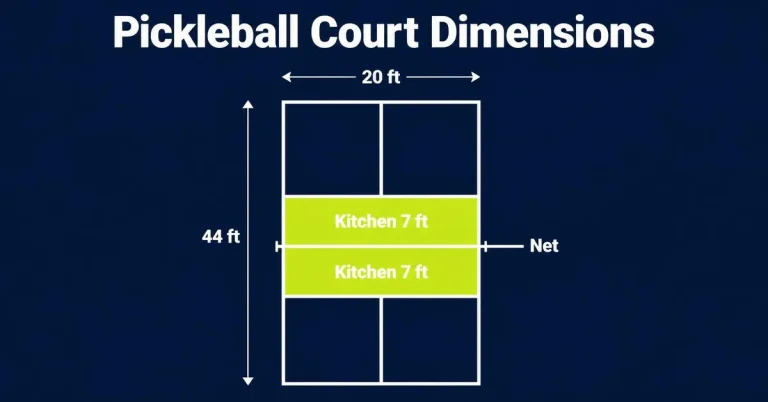
The kitchen rules guide explains the zone these drills are built around.
Pickleball drills questions, answered
How often should beginners drill?
Three times a week for 30 minutes is enough to improve steadily. Short, regular sessions beat one long session on the weekend.
Can I practice pickleball alone?
Yes. The five solo drills above need only a wall and a ball: wall dinks, wall volleys, serve placement, the drop-feed third shot drop, and shadow swings.
What is the most important drill for beginners?
The dink rally. The kitchen game is new to most beginners, so it improves fastest with practice, and it shows up in almost every point.
How long before drills show in games?
A few weeks of steady practice. You will notice cleaner contact first, then better placement, then calmer decisions in real points.
Do I need a partner to drill?
No, but a partner helps. Solo drills build touch and footwork. Partner drills add the timing and movement of real rallies.
Related guides
Checked: October 29, 2026, against published beginner drill guides and coaching advice.
3 Comments