
What Is a Dink in Pickleball? The Soft Kitchen Shot
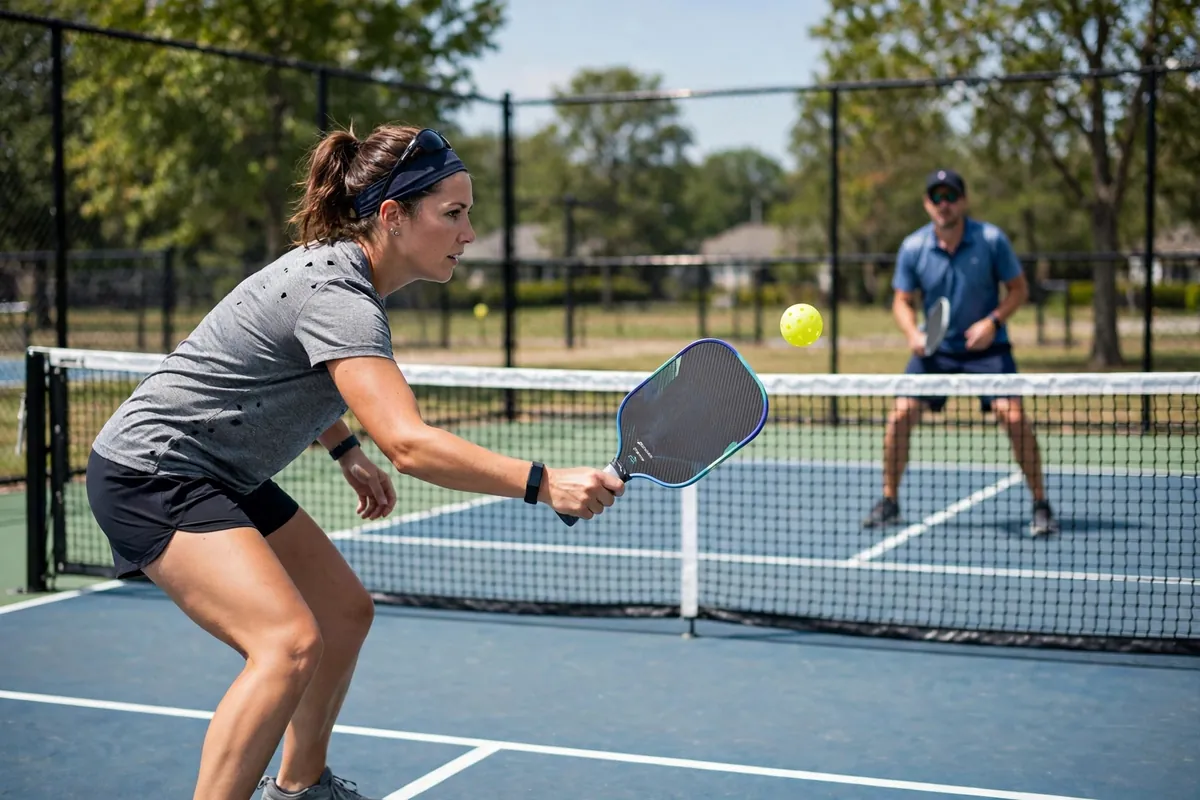
What is a dink in pickleball? If you watch two good players trade soft shots inches over the net, barely moving, for ten or twenty shots at a time, you are watching the heart of pickleball. That shot is called a dink, and it is the one shot that has no real equal in tennis, badminton, or any other racket sport. This site is named after it, because the dink is what makes pickleball feel like pickleball instead of small tennis.
A dink is not a trick shot and it is not a beginner shot you outgrow. Every level of the game uses it, from first-time players on public courts to professionals on television. The difference between levels is not whether players dink. It is how long they can keep a dink rally going without giving their opponent a ball to attack, and how quickly they punish the first ball that pops up too high.
This guide covers the full picture: what a dink is, why the kitchen rules make it necessary, how to hit one step by step, how dink rallies are actually won, the mistakes that hold beginners back, and simple drills that build a reliable dink in weeks rather than months.
Quick answer
✓A dink is a soft shot hit after a bounce, from near the kitchen line, that arcs just over the net and lands in your opponent’s kitchen (the non-volley zone).
- The official USA Pickleball definition calls it “a soft shot hit on a bounce from the NVZ intended to arc over the net and land within the opposing NVZ either straight across or diagonally crosscourt.”
- The dink exists because of the kitchen rules: you cannot volley while standing in the 7-foot non-volley zone, so a ball that lands softly in that zone cannot be smashed. It has to be played back softly.
- The goal of a dink is not to win the point outright. It is to keep the ball low and unattackable until your opponent makes a mistake or pops a ball up high enough to attack.
- Hit it with a short motion from the shoulder, an open paddle face, and almost no backswing. The power comes from a gentle lift, not a swing.
- Cross-court dinks are the safer default: there is more court to land in, and the ball takes longer to reach your opponent.
- A dink rally is a patience contest. The player who gets bored first and tries to force a winner usually loses the rally.
What is a dink in pickleball, in plain words
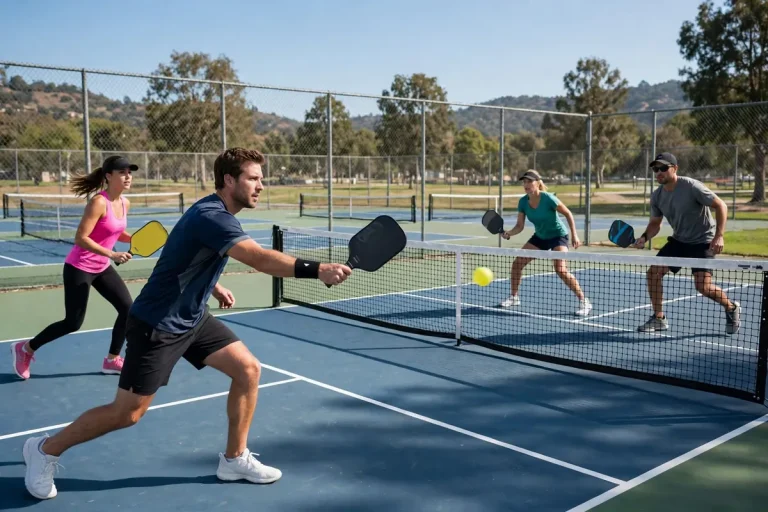
Strip away the rulebook language and a dink is this: you and your opponent are both standing at the kitchen line, and instead of hitting the ball hard, you tap it softly over the net so it drops into the small box on their side of the net. The ball bounces on their side, they tap it back the same way, and the exchange continues until somebody slips up.
Three details in the official definition matter for how you play the shot. First, a dink is hit on a bounce. That is what separates it from a volley, which is a ball hit out of the air. Second, it is intended to land inside the opposing non-volley zone, not behind it. A soft shot that lands past the kitchen line is not a dink. It is a short ball your opponent can step into and punish. Third, it can go straight ahead or diagonally cross-court. Both are dinks, and learning both directions is part of getting good at the shot.
A dink is almost always hit underhand, with the paddle below the level of the ball, lifting it gently upward. That lifting motion is what gives the ball its soft arc over the net. There is no wrist snap and no big swing. If your dink looks like a tennis groundstroke, it is too big.
One point that confuses beginners: during a dink exchange, players sometimes hit balls out of the air. That is allowed, but only if your feet are outside the kitchen when you do it. A ball taken out of the air from inside the kitchen is a fault, and a ball taken out of the air from behind the kitchen line is a volley, not a dink. The dink itself is always played off the bounce. Our full guide to kitchen rules covers the volley restrictions in detail.
Official definition: “a soft shot hit on a bounce from the NVZ intended to arc over the net and land within the opposing NVZ either straight across or diagonally crosscourt.”
Why the dink exists: the kitchen rules behind it
The dink is not a style choice. It is the direct result of one rule. The non-volley zone, the kitchen, runs 7 feet back from the net on each side and spans the full 20-foot width of the court. You cannot hit a volley while you, or anything connected to you, is touching that zone or its line. The line itself counts as part of the zone, so standing on the line is the same as standing in it.
Think about what that rule does to the game. Without it, the strongest player would stand a foot from the net and smash every ball straight down. Rallies would last two shots and the sport would reward reach and power above everything else. With the rule in place, the area right next to the net becomes a place where hard shots are illegal to hit from. A ball that lands softly in that area cannot be attacked from close range, because the defender cannot step in and volley it without faulting.
That is exactly the gap the dink exploits. When you dink well, you put the ball in the one place on the court where your opponent has no aggressive answer. They cannot smash it, because they would have to volley from inside the zone. They cannot drive it hard, because the ball is below net height and close to the net, so a hard swing sends it into the net or long. Their only safe reply is another soft shot, and that is how a dink rally starts.
Two related rules shape how you move during these exchanges. If you volley from outside the zone, your momentum must not carry you into it afterward, or the volley is a fault. And once you have touched the zone for any reason, you cannot volley again until both of your feet are back on the playing surface completely outside it. These rules are why footwork matters so much at the kitchen line, and why good players take small, careful steps instead of lunging.
How to hit a dink, step by step
You do not need a special paddle or a special grip to learn the dink. You need a short, calm motion and a feel for how little effort the shot takes. Work through these steps in order, and practice them slowly before you try to dink in a real game.
1. Start in a ready position
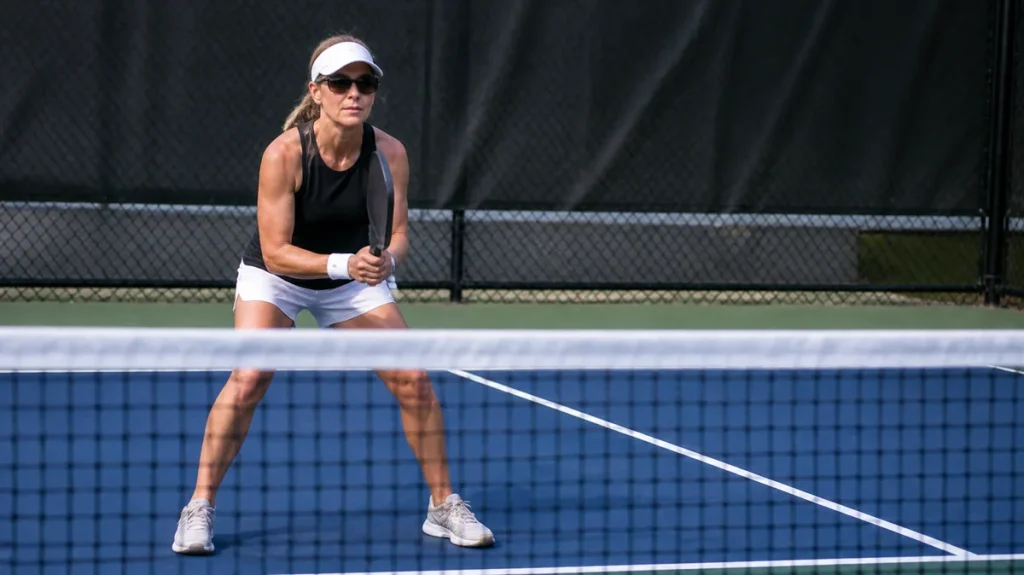
Stand just behind the kitchen line, not on it and not two steps back. Bend your knees so you are low, keep your weight on the balls of your feet, and hold your paddle up in front of your body, around chest height, with the face pointing slightly toward the net. This is your home base. Every dink starts here and returns here. If your paddle hangs down by your hip between shots, you will be late on every ball.
2. Move with small steps
Dinking footwork is shuffling, not running. When a ball comes to your forehand side, take one or two small side steps to get behind it. When a ball drops short, take a small step forward into the kitchen, hit it off the bounce, and step back out to your ready spot. Never take a big lunging step that leaves you off balance, because an off-balance player cannot hit a soft shot. The best dinkers look almost still. Their feet do small, constant adjustments while their upper body stays quiet.
3. Set the paddle angle before you swing
The paddle face should be slightly open, meaning tilted back a little so the face points slightly upward. That open face is what lifts the ball over the net with a soft arc. A flat paddle face sends the ball straight into the net tape. A face that is too open sends it floating high, which is the one thing a dink must never do. Set the angle early, while the ball is still on your opponent’s side, so the only thing left to do at contact is lift.
4. Contact the ball in front of your body
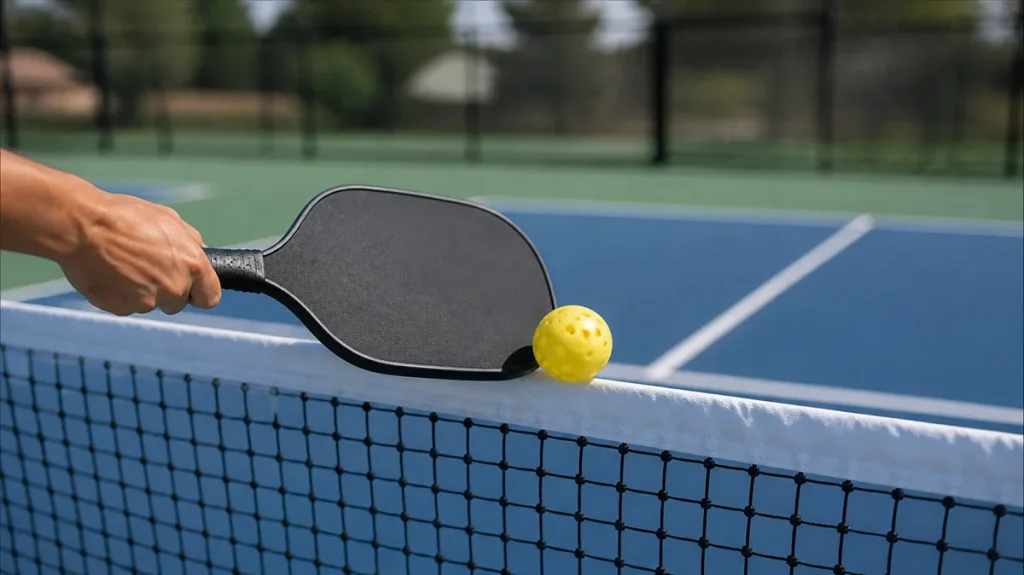
Let the ball bounce, then meet it in front of you, not beside your hip and not behind you. Contact usually happens below net height, because the ball is bouncing in the kitchen and you are close to the net. That is normal. A dink is a lifting shot: you pick the ball up from low and carry it gently over the net. If you wait until the ball is beside you, your only option is a wrist flick, and wrist flicks are how dinks go wrong.
5. Lift from the shoulder, not the wrist
The motion is short and simple. From your ready position, push the paddle forward and slightly upward with your shoulder and arm moving as one unit. Keep your wrist firm and quiet through contact. Take almost no backswing. USA Pickleball‘s own coaching advice puts it plainly: the shot is soft and controlled with movement from the shoulder, no wrist break, and minimal or no backswing, so you do not overpower the ball. The follow-through is short, just a few inches past contact, and then the paddle comes straight back to ready.
6. Aim low over the net, deep in the kitchen
Pick a target before you hit. For a beginner, the best target is the middle of your opponent’s kitchen, a foot or two inside the kitchen line. As you improve, aim closer to the kitchen line itself, because a dink that lands near the line forces your opponent to hit upward from a deeper, more awkward spot. The ball should cross the net low, only a few inches above the tape. A dink that clears the net by a foot is a ball your opponent can attack, and a dink that clips the tape and drops in is still a good dink. A net cord that lands in the kitchen is live and counts, so do not apologize for it.
Forehand dink vs backhand dink
Most players learn the forehand dink first, because it feels natural. The paddle is on your dominant side, the motion is a simple push forward, and you can see the ball clearly. The backhand dink is the shot that separates improving players from stuck ones, because opponents will find your backhand quickly and keep the ball there.
The backhand dink uses the same ideas as the forehand, with two adjustments. First, the paddle crosses slightly in front of your body, so you need to turn your shoulders a little more to make room. Second, most players need a slightly more open face on the backhand side to get the same gentle lift, because the wrist sits in a weaker position. Practice the backhand dink as much as the forehand, even though it feels worse at first. A player with only a forehand dink is a player with half a kitchen game.
Cross-court dinks deserve special attention on both sides. A cross-court dink travels diagonally, so it has more court to land in and more time in the air, which gives you a bigger margin for error. It also moves your opponent sideways, which opens up the straight-ahead dink on the next shot. Straight-ahead dinks come back faster and leave less room for error, so use them as a change of pace, not your default.
Dink rally tactics: how these rallies are actually won
A dink rally is not a contest of who hits the prettiest soft shot. It is a contest of who makes the first mistake, and good players win these rallies by creating the conditions for their opponent’s mistake. That takes patience, placement, and a clear rule for when to attack.
Keep the ball low and make them hit up
Your first job in any dink rally is simple: keep every ball below net height on your opponent’s side. A ball that stays low cannot be hit down. Your opponent has to lift it back, and every lift is a chance for them to float one slightly too high. When that high ball comes, that is your moment. Step in and hit it firmly downward, either at their feet or into the open court. USA Pickleball’s coaching guidance says the same thing: be patient, keep dinking until the opponent makes a mistake, and when a ball comes up high, there is a good chance for a put-away shot.
Aim at feet, backhands, and the middle
Placement beats power in a dink rally. Three targets cause the most trouble. Aim at your opponent’s feet and they have to bend low and lift from an awkward spot. Aim at their backhand side and most recreational players will give you a weaker, higher reply. In doubles, aim at the middle between the two opponents and you create doubt about who should take the ball, which often produces a soft or confused reply. Move the ball between these targets instead of hitting the same spot twice in a row. A dink rally where your opponent never has to move is a rally they will never lose.
Move your opponent, then use the space
Side-to-side movement is the quiet weapon of the dink game. A cross-court dink pulls your opponent wide. The next dink, hit straight ahead into the space they just left, forces a longer reach and a weaker reply. Two or three exchanges of this pattern will usually produce either a pop-up you can attack or a ball hit into the net. The key is that you stay balanced while they are the ones stretching. If you are stretching too, you are playing their game.
When not to dink
The dink is the right shot when both teams are at the kitchen line. It is the wrong shot when one of your opponents is still deep at the baseline. A dink in that situation only helps them, because it draws them forward to the net, which is exactly where they want to be. Keep a deep opponent deep with a firm drive or a deep shot with pace, and save the dink for when they are already at the line. The same logic applies in reverse: if you are the player stuck at the baseline, do not try to dink your way out of trouble. Get to the net first, then dink.
Common beginner mistakes
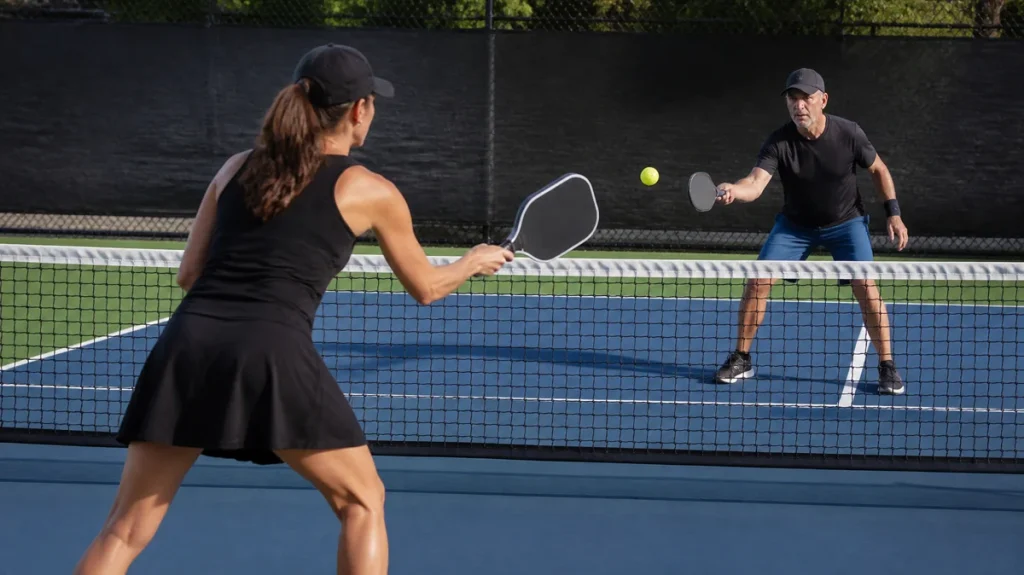
Almost every beginner dink problem comes from the same root cause: hitting the shot too hard or with too much motion. Here are the mistakes to watch for in your own game.
- A big backswing. If your paddle goes back past your body before a dink, the shot will have too much pace no matter how gently you try to swing forward. Keep the paddle in front of you the whole time. The dink has almost no backswing at all.
- A wrist flick. The wrist adds speed and unpredictability in equal measure. A flicked dink sometimes goes in beautifully and sometimes flies long or into the net, and you will never know which one is coming. Lock the wrist and move from the shoulder.
- Hitting too high over the net. Height is the enemy of a dink. Every inch above the tape is an inch your opponent can use to attack. If your dinks keep getting smashed, the problem is usually not your opponent’s power. It is your height. Aim lower and accept that a few will clip the tape.
- Stepping back instead of stepping in. When a ball drops short, beginners often step backward and let it bounce at their feet. That turns an easy dink into a hard one. Step forward into the kitchen, meet the ball early, and step back out after contact.
- Standing flat-footed. A player standing upright with straight legs cannot react to a ball at their feet or a ball pushed wide. Stay low, stay on the balls of your feet, and keep your weight slightly forward. If your heels are planted, you are already late.
- Attacking too early. The most common tactical mistake is trying to end a dink rally with a hard shot before the opening exists. A drive hit from below net height goes into the net far more often than it wins the point. Wait for a ball that is clearly above net height, then attack it with confidence. Patience is not passive play. It is the tactic that makes the attack possible.
- Aiming too close to the lines. Beginners often try to paint the sideline or the kitchen line with their dinks and miss wide or long. Aim for the middle of the kitchen until your consistency is solid, then move your targets closer to the lines a few inches at a time.
Dink vs drive vs drop: how the soft shots compare
Pickleball has three shots that get confused with each other, because all of them can be hit softly and all of them can land in the kitchen. They are different shots with different jobs.
| Shot | Where you hit it from | What it does | When to use it |
|---|---|---|---|
| Dink | At the kitchen line, after a bounce | Arcs softly into the opponent’s kitchen and keeps the rally neutral | When both teams are at the net and nobody has an attackable ball |
| Third-shot drop | From the baseline or mid-court, usually as the third shot of the rally | Arcs softly into the opponent’s kitchen so your team can move forward to the net | When your team is stuck at the baseline and needs to reach the kitchen safely |
| Drive | From anywhere, usually mid-court or baseline | Travels fast and low, aimed at feet or open court | When the ball sits up high enough to hit firmly, or when an opponent is still deep |
The dink and the third-shot drop look similar because both are soft shots that land in the kitchen, but they solve opposite problems. The drop gets you to the net. The dink keeps you safe once you are already there. The drive is the aggressive option, and it works best when the ball is above net height or your opponent is out of position. Our guide to doubles rules explains how these shots fit into the flow of a doubles rally, including the third-shot drop that moves the serving team forward.
Simple drills to learn the dink
You do not need a coach or a ball machine to build a reliable dink. You need a partner, a basket of balls, and twenty minutes a few times a week. These four drills cover the whole shot.
- Cross-court dink rally. Stand diagonally across from your partner at the kitchen line and trade cross-court dinks only. Count how many you can hit in a row without a mistake. Beginners should aim for 10 in a row, then 20, then 50. This single drill builds more dink skill than any other, because the cross-court dink is the most forgiving and most used dink in real games.
- Target dinking. Place a towel or a spare paddle in the middle of your partner’s kitchen and try to land five dinks in a row on or near it. Then move the target close to the kitchen line and repeat. This teaches the placement control that turns a rally dink into a weapon.
- Dink only game. Play a game where the only legal shots are dinks. No drives, no smashes, no lobs. First to 11 wins, and any hard shot loses the rally on the spot. This drill forces patience, because the only way to score is to wait for your opponent’s mistake. It is also the fastest way to discover which of your dinks float too high.
- Drop into dink sequence. One player starts at the baseline and hits a third-shot drop, then both players move to the kitchen line and continue with a dink rally. This connects the two soft shots the way they actually connect in a real point, and it teaches the footwork of moving forward after a drop. Our guide to serve rules covers how rallies start, which is where this sequence begins.
✓Pro tip: keep drill sessions short and focused. Twenty minutes of deliberate dink practice, where you are thinking about paddle angle and height on every shot, beats an hour of casual rallying where you are thinking about nothing at all.
Frequently asked questions
What is a dink in pickleball?
A dink is a soft shot hit after a bounce from near the kitchen line, intended to arc over the net and land inside your opponent’s non-volley zone, either straight ahead or diagonally cross-court. It is the defining soft shot of pickleball, and it exists because the kitchen rules stop players from volleying hard shots from close to the net.
Why is it called a dink?
The honest answer is that nobody documented the origin of the word. It has been part of pickleball language since the early days of the sport, and it describes the small, soft tapping motion of the shot. What matters more than the name is the shot itself, which is why this site took its name from it.
Do you have to let the ball bounce before a dink?
Yes, by definition. A dink is a shot hit on a bounce. If you hit the ball out of the air, that is a volley, not a dink, and if your feet are inside the kitchen when you volley, it is a fault. During a dink exchange you can volley balls that come high, but only with your feet outside the kitchen line.
Can you step into the kitchen to hit a dink?
Yes. The kitchen rules only restrict volleys. You can step into the kitchen any time you like to hit a ball that has already bounced, and you can stay there afterward. That is exactly what happens on every dink: the ball bounces in the kitchen, you step in, hit it softly, and either stay or step back out to your ready spot.
What is the difference between a dink and a drop shot?
A dink is hit from the kitchen line during an exchange at the net, while a third-shot drop is usually hit from the baseline or mid-court to get your team to the net. Both are soft shots that land in the opponent’s kitchen, but the drop solves the problem of reaching the net and the dink solves the problem of staying safe once you are there.
Should beginners learn to dink right away?
Yes, and sooner than most beginners expect. The dink is not an advanced shot reserved for later. It is one of the first shots you should practice, because most rallies in doubles end up at the kitchen line, and a player who cannot dink has no safe shot once they get there. Start with cross-court dink rallies and build from there.
Why do my dinks keep popping up?
Almost always because of height or wrist. A dink that clears the net by more than a few inches gives your opponent an attackable ball, and a wrist flick adds unpredictable pace. Fix it by locking your wrist, shortening your motion, and aiming lower over the tape. If a few clip the net, that is fine. Net cords that land in are live.
Is the dink used in singles too?
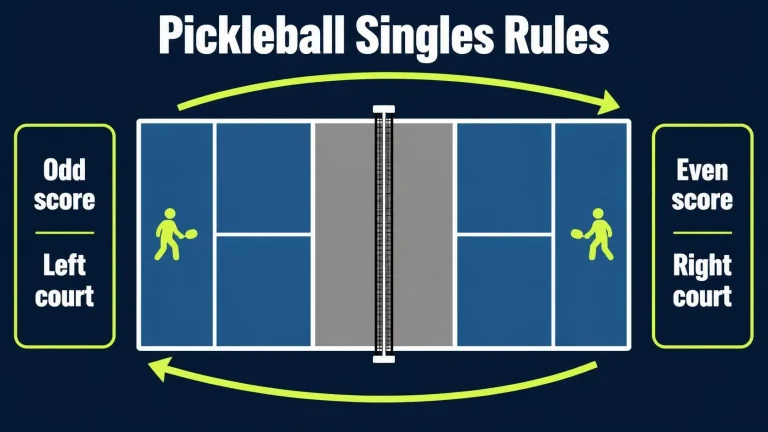
Yes, though less often than in doubles. Singles rallies spend more time with players at the baseline, because one player has to cover the whole court. But when both singles players reach the kitchen line, the dink works exactly the same way, and our guide to singles rules covers how singles rallies reach the net.
How long should a dink rally last?
As long as it takes for somebody to make a mistake. Recreational dink rallies of ten or twenty shots are normal, and longer ones are common at higher levels. There is no target length. The rally ends when one player floats a ball too high, hits the net, or forces a winner off a genuine opening. Trying to end it early is usually what ends it against you.
What paddle is best for dinking?
Any beginner-friendly paddle works for learning the dink, and no paddle fixes a bad dink on its own. That said, players who dink a lot often prefer paddles with a softer face and a larger sweet spot, because those give more touch on soft shots. Technique matters far more than equipment at this stage, so learn the motion first and worry about paddle specs later.
Sources and verification
Checked: October 25, 2026, against the 2026 USA Pickleball Official Rulebook, USA Pickleball coaching guidance, and USA Pickleball strategy guidance.
8 Comments